Table of Contents
- How To Arrange Lava Rocks On A Gas Fire Pit
- Why Use Lava Rocks On A Gas Fire Pit?
- How to Prepare Lava Rocks for a Gas Fire Pit
- How To Arrange Lava Rocks On A Gas Fire Pit
- How Deep Should Lava Rocks Be in a Gas Fire Pit?
- Should Lava Rocks Cover a Gas Fire Pit Burner?
- Check the Flame After Arranging Lava Rocks
- Can You Mix Lava Rocks and Fire Glass?
- Can Wet Lava Rocks Explode in a Gas Fire Pit?
- How Often Should You Replace Gas Fire Pit Lava Rocks?
- Can You Use Lava Rocks in a Wood-Burning Fire Pit?
- Gas Fire Pit Lava Rock Safety Tips
- FAQs
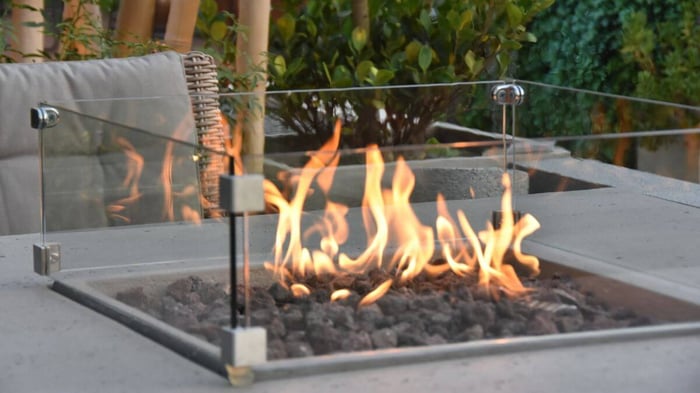
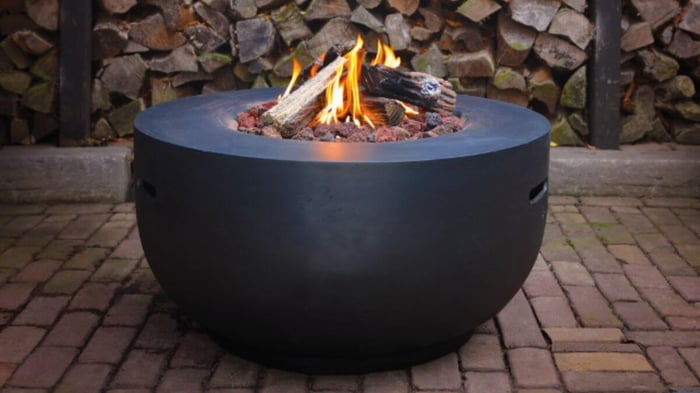
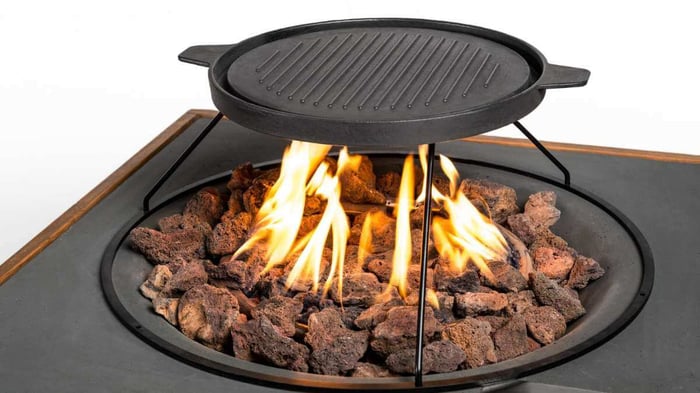
If you’ve decided to go for a gas fire pit with lava rocks, we commend you on your decision – you get an even heat distribution and a richer flame, which sets the ambience for your outdoor gathering.
How To Arrange Lava Rocks On A Gas Fire Pit
Lava rocks are a popular choice for gas fire pits because they are heat-resistant, affordable and provide a natural finish around the burner.
However, you need to arrange them correctly. Using too many rocks, packing them too tightly or covering ignition components can affect the flame and prevent the fire pit from lighting safely.
The correct quantity and arrangement vary between models, so always check the manufacturer’s instructions before adding or replacing lava rocks.
Why Use Lava Rocks On A Gas Fire Pit?
Lava rocks help conceal the burner while allowing the flames to move between the individual pieces. They also absorb some heat and release it gradually as the fire pit cools.
Other benefits include:
- A natural appearance
- Resistance to high temperatures
- A lower cost than many types of fire glass
- Easy maintenance and replacement
- Compatibility with many natural gas and LPG fire pits
Only use lava rock intended for gas fire pits. Do not use gravel, river stones, paving pieces or ordinary garden rocks, as they may crack or spit when heated.

How to Prepare Lava Rocks for a Gas Fire Pit
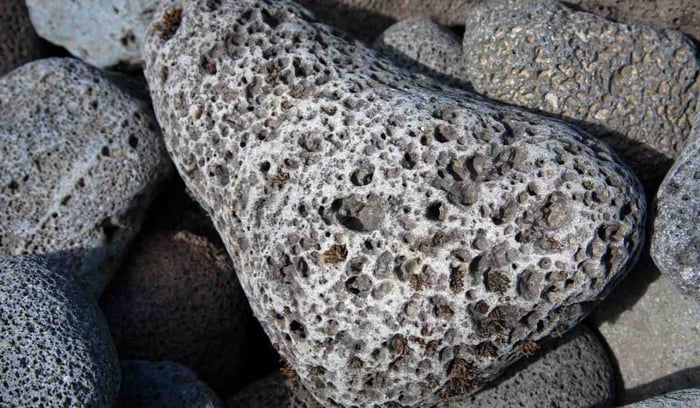
New lava rocks can contain dust and small fragments left behind during processing and transport.
You can remove this dust by brushing, sieving or rinsing the rocks with clean water. Rinsing is thorough, but the rocks must be completely dry before you use them.
Lava rock is porous and can retain moisture. When wet rock is heated, trapped water can turn to steam and cause it to crack or spit.
This is particularly important after:
- Rinsing the rocks
- Heavy rain
- Outdoor storage
- Opening a damp bag
Allow the rocks to dry fully in a well-ventilated place before placing them in the fire pit.
How To Arrange Lava Rocks On A Gas Fire Pit
Turn off the gas supply and make sure the fire pit is completely cool before handling the burner or fire media.
Place the lava rocks gently into the burner pan and spread them in a loose, even layer. Do not pack them tightly or build a large mound.
Use only the quantity recommended by the manufacturer. For many gas fire pits, the rocks should be deep enough to conceal most of the burner without restricting the flames or airflow.
Unless the fire pit instructions state otherwise, keep these areas clear:
- Pilot assembly
- Ignition electrode
- Thermocouple
- Drainage holes
- Ventilation openings
Do not pour the entire bag directly over the burner. This can damage ignition components and force dust into the burner ports.
How Deep Should Lava Rocks Be in a Gas Fire Pit?
There is no standard lava rock depth suitable for every gas fire pit.
The correct depth depends on the burner design, ignition system and type of fire media. Adding too much lava rock can restrict airflow, cover burner ports and interfere with ignition.
Do not automatically create a layer four or five inches deep. Follow the quantity or depth stated in the manufacturer’s instructions.
Should Lava Rocks Cover a Gas Fire Pit Burner?
Some gas fire pit burners are designed to be lightly covered with lava rocks. Others require parts of the burner and ignition system to remain exposed.
You should not assume that the burner must always be completely covered or that the rocks should sit on a separate grate.
Follow the instructions for your particular fire pit. Do not add a grate, mesh or media support unless it is supplied or approved by the manufacturer.
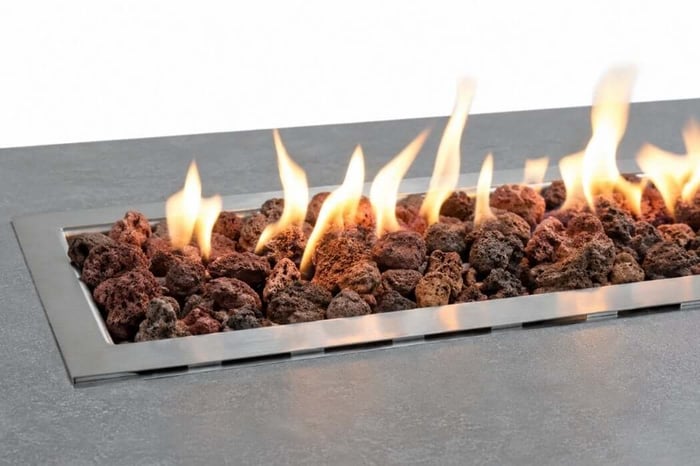
Check the Flame After Arranging Lava Rocks
Once the rocks are in position, light the fire pit according to the manufacturer’s instructions and check the flame.
Blue flames are common, particularly near the burner and when the fire pit is first lit. Yellow and orange flames may become more visible as the burner and lava rocks heat up. The normal flame colour and pattern vary between fire pit models.
Switch the fire pit off if you notice:
- Delayed ignition
- A strong smell of unburnt gas
- Heavy or repeated soot deposits
- Unusually weak, lazy or unstable flames
- Parts of the burner failing to light
- Flames appearing beneath the burner pan
- A significant change after adding the lava rocks
These signs may indicate that the rocks are too deep, too tightly packed or obstructing the burner or ignition components.
Allow the fire pit to cool fully before rearranging the rocks.
Can You Mix Lava Rocks and Fire Glass?
Some gas fire pits allow you to use lava rock beneath a decorative layer of fire glass.
Only combine the two materials when the manufacturer approves both the media and the proposed arrangement. Using too much media can affect airflow and ignition.
Only use tempered fire glass made for gas fire pits. Ordinary decorative glass may crack, melt or produce sharp fragments when heated.
Can Wet Lava Rocks Explode in a Gas Fire Pit?
Wet lava rocks can crack, split or spit when heated rapidly because trapped moisture turns to steam.
Always make sure the rocks are completely dry before lighting the fire pit. Use a suitable burner lid or weather cover to help protect the fire media from rain when the appliance is switched off and cool.
Lava rocks do not protect the burner from wet weather and can hold water around the burner pan.
How Often Should You Replace Gas Fire Pit Lava Rocks?
Lava rocks do not have a fixed lifespan, but you should inspect them periodically.
Repeated heating, weather exposure and handling can cause the rocks to break down. Small fragments and dust can then collect around the burner ports.
Replace lava rocks when they:
- Begin to crumble
- Produce excessive dust
- Break into small fragments
- Become heavily contaminated
- Are badly cracked
- Become difficult to clean
Heavy soot may indicate a combustion or gas-supply problem rather than worn lava rocks. Stop using the fire pit if soot repeatedly returns after cleaning.
Can You Use Lava Rocks in a Wood-Burning Fire Pit?
Only use lava rocks in a wood-burning fire pit when the manufacturer specifically permits it.
In some models, lava rock can interfere with drainage, collect ash or restrict the airflow needed for the fire. Media suitable for a gas fire pit is not automatically suitable for a wood-burning model.
Gas Fire Pit Lava Rock Safety Tips
Use only approved lava rock and make sure it is completely dry before lighting the fire pit.
Arrange the rocks in a loose, even layer, avoid overfilling the burner pan and keep ignition and ventilation components clear.
If the fire pit lights slowly, burns unevenly, produces heavy soot or smells strongly of gas, switch it off immediately. Allow it to cool before checking the rock arrangement, or have the appliance inspected by a suitably qualified professional.
EcoSmart Fire Ark 40 Gas Fire Table

£2,195.00
EcoSmart Fire Ark 40 Gas Fire Pit Table Bring warmth and style to your patio or garden with the EcoSmart Fire Ark 40 Gas Fire Pit Table. This circular fire pit features a fluid concrete design in Natural, Graphite, or… Read More
Subscribe to our email
Just enter your email address below to receive a monthly email with links to all the latest blog posts. Simple unsubscribe at any time.
FAQs
Can you use ordinary rocks in a gas fire pit
No!
Use only lava rock sold specifically for gas fire pits.
Gravel, river stones, paving pieces and garden rocks can trap moisture and crack or explode when heated, which makes them unsafe.
Do you need to dry lava rocks before using them
Yes.
Lava rock is porous and holds water, and wet rocks may spit or crack when heated.
Make sure they are completely dry before placing them in the burner pan, especially after rain or washing.
How much lava rock do you need for a gas fire pit?
Only enough to form a loose, even layer that conceals most of the burner, using the quantity stated in your manufacturer's instructions.
Avoid deep mounds or tightly packed rock, as too much media can affect the flame and make the fire pit harder to light.